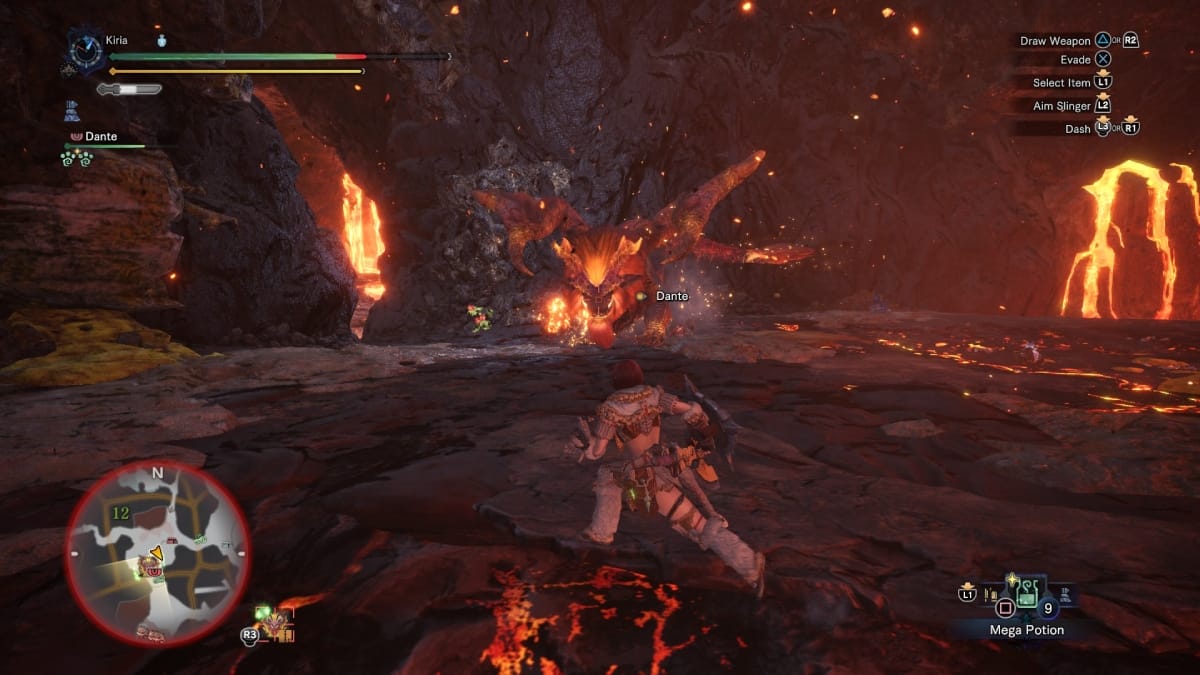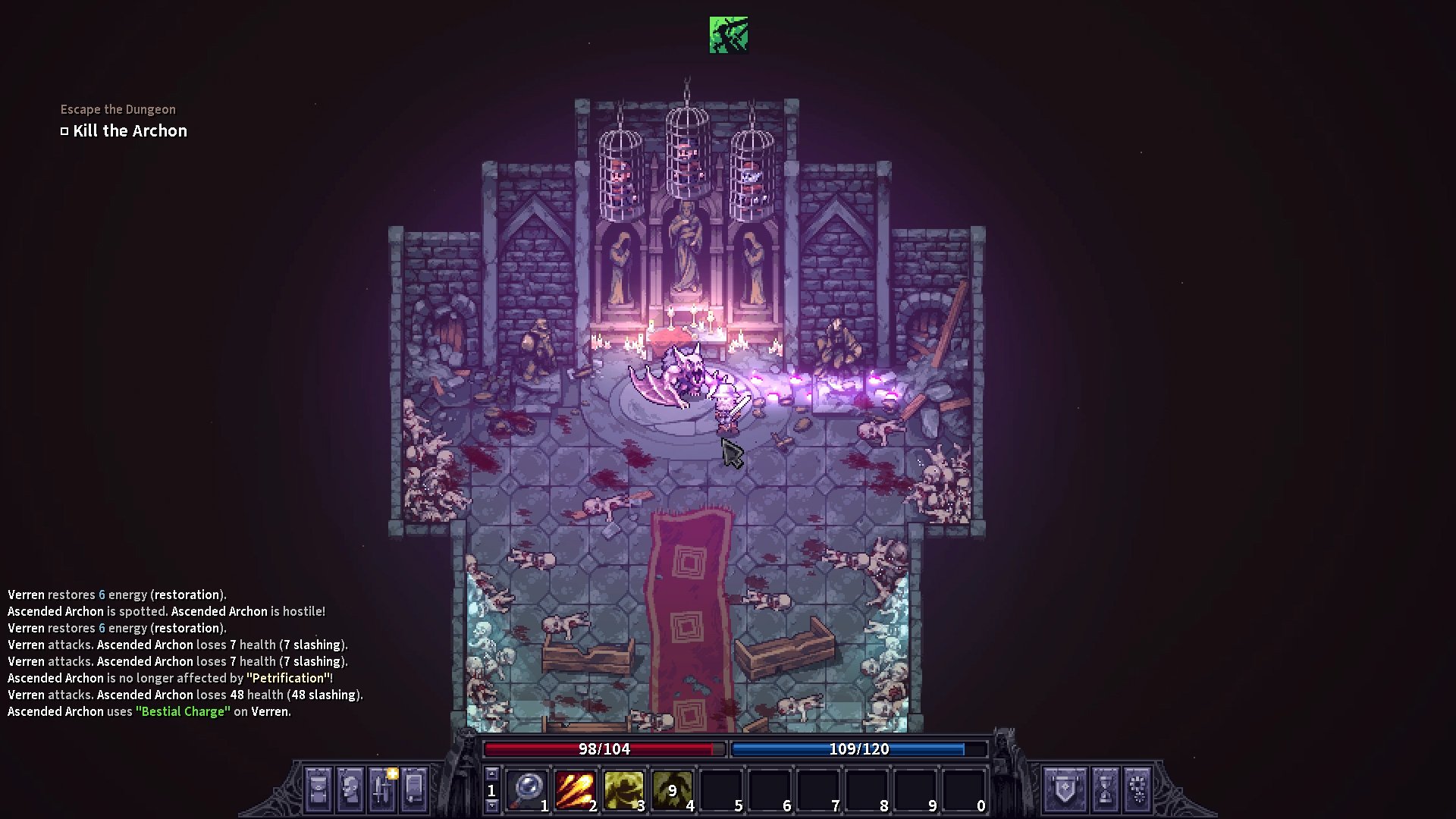
Damage-type resistance changes the damage of a hit according to its type, not its location or timing. The boss reduces a sword slash to one fifth of its base value while a thrust to the same body keeps full value. Distinct hit reactions and side-by-side damage marks expose the rule without making the resisted attack a miss.

Open boss builder
Show the resistanceKern's runes identify a persistent slash-resistant body. Tavi approaches with the same sword; both damage bars begin empty.
Compare two sword hits A rune-ringed stone boss stands still while a sword-carrying player closes a short distance. A broad slash lands at one spot with a small impact and fills only one fifth of the first damage bar. A straight thrust lands on that same spot with a larger reaction and fills the second bar. Both results remain visible before the comparison resets. Boss Player

Kern's runes identify a persistent slash-resistant body. Tavi approaches with the same sword; both damage bars begin empty.

Implementation checklist

Tune the resisted type, multiplier, alternate attack, feedback scale, and encounter length together.

Core checks

Three questions for the mechanic

  • What changes when the damage type changes?

    Hold the target, base damage, hit position, and attack reach constant. Apply a 0.2 multiplier only to slash damage; a 100-point slash resolves to 20, while a 100-point thrust resolves to 100. Test mixed-type attacks per component rather than assigning the entire hit the most favorable type.

  • Can the player read a reduced hit?

    Make both strikes visibly connect. The slash at 2.05 seconds makes a small chip and short recoil; the thrust at 3.55 seconds makes a larger impact and stagger. Show the two results together so low damage is not mistaken for broken hit detection.

  • Is a useful alternative available?

    Tavi uses a different attack motion with the same sword, at the same range and target. Check the actual player move set before choosing a resisted type. If no alternative exists, keep the resisted route viable or supply an accessible new response before this encounter.

Design mistakes

  • Resistance becomes hidden immunity

    A nominal 80% reduction can feel like a non-hit if the boss never reacts and the health bar barely moves. Preserve contact feedback and a visible nonzero result, or explicitly teach immunity as a separate rule.

  • The comparison changes several variables

    If the second attack hits a weak point, gains a critical bonus, or lands during recovery, its larger number no longer demonstrates type resistance. Compare equal base damage at the same location before layering other systems.

Tuning

Tune the attack

  • Keep the ratio inspectable

    The illustrative slash multiplier is 0.2 and the thrust multiplier is 1.0. The paired bars record 20 and 100 from the same 100-point base. Adjust these values in playtests until the difference is legible without making the slash functionally useless.

  • Separate contact from damage

    Both hits resolve at the same torso point. Run hit detection first, then the per-type multiplier, then the corresponding damage and impact feedback. A slash should not pass through the stone silently.

  • Preserve mixed attacks

    For a weapon that deals both physical and elemental damage, apply resistance to each component before summing. Avoid collapsing all components into a single tag or allowing a small unresisted component to bypass the resisted one.

  • Check build viability

    Measure encounter length for a slash-focused build, a thrust-focused build, and a mixed build. A resistant boss may reward adaptation without invalidating a player's earlier investment; telegraph a required type switch before the fight if one is truly mandatory.

Arena

  • One stone body, two readable marks

    Kern's etched stone stays in the same place for both hits. The first short chip and second stronger stagger are compared in small adjacent bars; no new exposed surface or timed opening appears.

Player upgrades

  • Respect the available attack verbs

    A sword can slash and thrust without adding a new weapon. If the actual game has only one sword verb, offer another already-learned damage source or soften the multiplier. Re-evaluate resistance when upgrades add split damage, armor piercing, or conversions.

Do not confuse this with

  • Type is not direction or phase

    A directional shield tests where a hit comes from; this rule tests what damage type a connected hit carries. Situational immunity switches protection according to a state, whereas this example keeps the slash multiplier throughout. A weak point changes value by target location, which stays fixed here.

Bosses that use this mechanic

Learn more

Found an inaccuracy or have a suggestion for this page? Propose an edit on GitHub