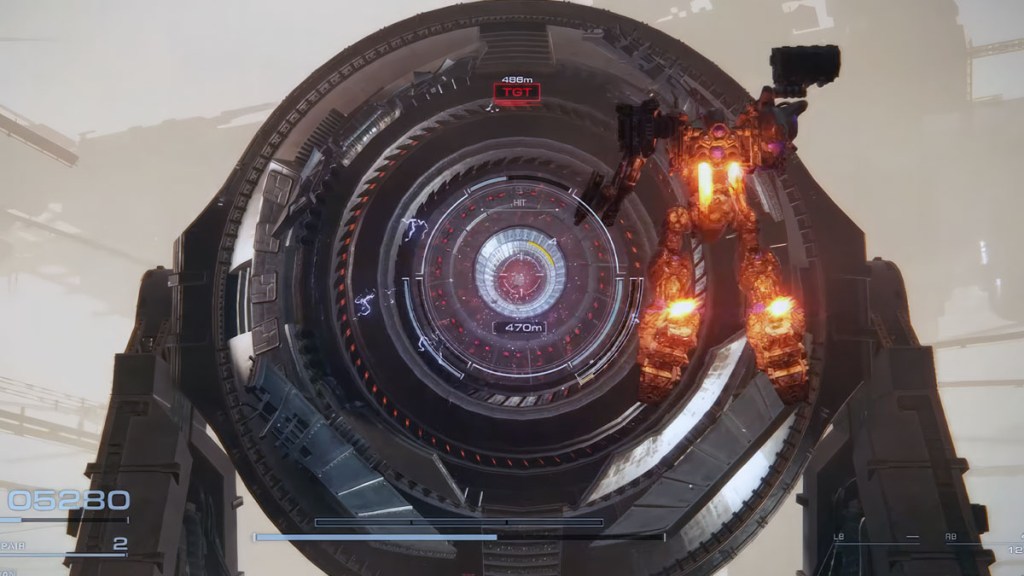
Tavi moves left while Kern's rune emitter turns to follow him. The narrow guide ray is only a warning. Kern fixes the angle, brightens the cue, and fires a wide beam along that exact line. Tavi changes course after the lock and clears the beam with ordinary movement. The source does not turn during damage or snap back between loops.

Open boss builder
Track the playerTavi moves left; Kern's emitter and thin warning ray turn toward Tavi's current position. The thin ray does not damage.
Follow the emitter's angle Kern's rune emitter turns toward Tavi as Tavi moves left. A thin non-damaging ray tracks him. The emitter locks; Tavi runs right. A wide beam fires along the fixed angle and misses before both reset smoothly. Boss Player

Tavi moves left; Kern's emitter and thin warning ray turn toward Tavi's current position. The thin ray does not damage.

Implementation checklist

Set an emitter pivot and turn speed, expose the tracking cue, choose a lock instant, and test full-body clearance before the beam becomes dangerous.

Core checks

Three questions for the mechanic

  • Where is the source?

    Place a readable pivot on the boss, not an unexplained line from screen space. Aim its guide ray at the player's current position with a bounded angular speed; keep the boss's full body unrotated.

  • When does tracking stop?

    Use a distinct lock flash or sound, store the final emitter angle, and hold it through the startup and active beam. The thin guide ray is a warning, not a hidden hitbox.

  • Can the player clear the lane?

    After lock, allow enough time for ordinary movement to leave the beam half-width plus the full player radius. Test near, far, slow, and direction-reversal starts; then leave a useful recovery.

Design mistakes

  • The source keeps tracking during damage

    A beam that quietly turns after the lock invalidates the announced lane. If a later sweeping phase is intended, signal it as a separate rule and test its moving hitbox.

  • A cosmetic ray implies unsafe space

    When a faint tracking guide damages on contact, the visual language contradicts the rule. Distinguish warning from the wide active beam with thickness, brightness, and timing, not color alone.

  • Only the player's center clears

    A center point outside the line can still overlap a thick beam. Include the player's collision radius and test the worst lock angle near arena edges.

Tuning

Tune the attack

  • Bound the pivot

    Expose emitter position, maximum turn speed, guide length, lock time, beam half-width, and active duration as tuning parameters. Avoid instantaneous correction to a sudden player turn.

  • Keep one rule per phase

    Tracking changes the source angle before commitment; firing uses the stored angle. This differs from a homing projectile, a sweeping active beam, and a marker that simply locks a location.

  • Budget a fair response

    Measure perpendicular distance from the complete player body to the committed beam segment. The lock-to-fire window must cover that distance at a plausible movement speed, with a little margin for perception.

Arena

  • What the mechanic communicates

    Kern's rune eye visibly follows Tavi, then hardens into a fixed stone firing channel. Tavi wins space by reacting to the commitment, not by guessing where an invisible weapon points.

Player upgrades

  • Adapt it to the player verbs

    Ordinary movement is the baseline escape. A dash can widen the margin, while a guard may offer an alternate response; neither should be required unless its availability is guaranteed and clearly taught.

Do not confuse this with

  • Keep the mechanic distinct

    Source tracking moves the emitter before release. Target lock marks a location, predictive aiming leads observed velocity, and scanning beam changes its direction while already active. This example holds its angle once locked.

Bosses that use this mechanic

Learn more

Found an inaccuracy or have a suggestion for this page? Propose an edit on GitHub