
Wally Warbles
CupheadWally's feather bursts release several threats as one visible beat. The radial geometry differs from Kern's parallel lanes, but the shared launch accent makes each cluster a single timing decision.
A volley makes several projectiles one timing decision. Kern holds three runes on a visible launch rack, fixes their parallel lanes, and releases them on one beat. Tavi moves beyond the right edge before the bolts arrive. Dashed guides are harmless; only traveling bolts deal damage. Recovery begins after the entire formation clears.
Kern charges three visible runes and shows the full width and fixed direction of the formation.
Autoplay is disabled by the reduced-motion setting. Use the timeline slider to inspect the loop.
Tune the formation width, number of lanes, release beat, projectile size and speed, edge clearance, and recovery as one rule.
Show every occupied lane and both outer limits during the tell. A cue that reveals only the center shot understates the space the volley will cover.
Measure from the player's starting position to an outside lane with full player and projectile radii included. Leave enough time after the formation is legible and before the first bolt arrives.
All three projectiles share a release beat and speed. Do not promise a safe punish window while any bolt still crosses the useful route.
A single warning line cannot explain three occupied lanes. Preview the outer width as clearly as the center.
The full collision body needs room beyond the outer projectile, not merely an empty line between sprites. Test clearance at the actual crossing time.
Give the three bolts one release frame and one audio accent. Staggered release times turn the decision into burst fire, which asks the player to track a longer cadence.
Fixed spacing makes the formation read as one moving width. Diverging angles would create a fan with gaps that change size over distance.
First ensure an edge is reachable with the base move, then increase travel speed only while the reaction window stays measurable. More bolts can widen the demand without secretly accelerating it.
A later volley may shift or widen its lanes, but show the new outer limits before its release. Do not let the current formation home toward Tavi.
Kern's three floating runes are both the source and the count of the upcoming shots. Keep their silhouettes visible against the arena so the projectile count is known before launch.
The diagram uses ordinary lateral movement to clear the right edge. Shields, dashes, or parries may add choices, but the base route should remain demonstrably possible.
A volley is one simultaneous release of several projectiles. This example uses parallel lanes and an outer-edge escape. A fan diverges from one source, a gap volley includes a deliberate internal opening, and burst fire separates releases over time.
Wally's feather bursts release several threats as one visible beat. The radial geometry differs from Kern's parallel lanes, but the shared launch accent makes each cluster a single timing decision.
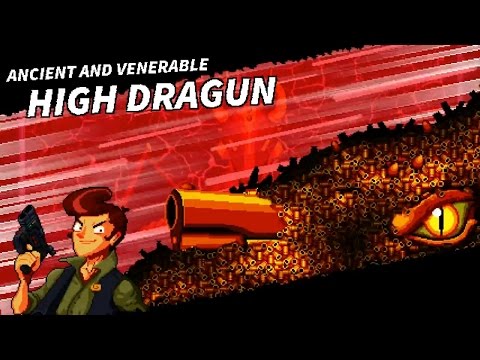
High Dragun sends broad bullet formations across the arena. Its changing gaps are a more complex variant; Kern's simplified row isolates the shared release, fixed width, and outer-edge escape.

Hyperion uses the organ to layer projectile clusters and waves. The developer describes distinct color-coded patterns; Kern's parallel three-shot volley extracts only the simultaneous-formation decision from that richer 3D fight.
Found an inaccuracy or have a suggestion for this page? Propose an edit on GitHub