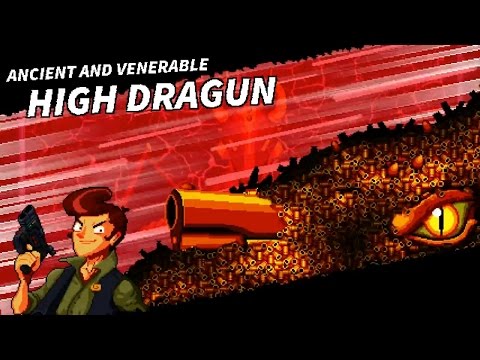
High Dragun
Enter the GungeonHigh Dragun demonstrates shrinking safe area in a 2D encounter. Show the future boundary, direction of travel, and final stopping point before it moves; the safe side must remain unambiguous.
Danger advances inward or outward to reduce usable space, increasing contact pressure and forcing the encounter toward a tighter final layout.
Show the future boundary, direction of travel, and final stopping point before it moves; the safe side must remain unambiguous.
Autoplay is disabled by the reduced-motion setting. Use the timeline slider to inspect the loop.
Tune the signal, commitment, geometry, response, and recovery of a shrinking safe area as one rule.
Show the future boundary, direction of travel, and final stopping point before it moves; the safe side must remain unambiguous.
The player repositions early, finishes a task before compression, controls where other hazards land, or uses a temporary opening to cross.
The boundary stops at the announced minimum size and holds a stable interval so the player can understand and use the compressed arena.
Continuous compression with no stable interval denies the player time to understand or use the new arena state.
If the visible shrinking safe area cue promises a different area or timing, the player cannot carry the learned rule into the next cycle.
Tune boundary speed, minimum safe area, pause intervals, other attack footprints, and camera framing at every shrink stage.
Shrink in discrete, signaled steps or shift the safe center while preserving enough space for the next required response.
The boundary stops at the announced minimum size and holds a stable interval so the player can understand and use the compressed arena.
Danger advances inward or outward to reduce usable space, increasing contact pressure and forcing the encounter toward a tighter final layout. The encounter uses that rule as a short promise: a visible signal, a committed action, and a result the player can verify.
The player repositions early, finishes a task before compression, controls where other hazards land, or uses a temporary opening to cross. Tune boundary speed, minimum safe area, pause intervals, other attack footprints, and camera framing at every shrink stage.
Continuous compression with no stable interval denies the player time to understand or use the new arena state. Do not hide that distinction behind extra effects or tracking that the announced rule does not contain.
High Dragun demonstrates shrinking safe area in a 2D encounter. Show the future boundary, direction of travel, and final stopping point before it moves; the safe side must remain unambiguous.

Absolute Radiance demonstrates shrinking safe area in a 2D encounter. The player repositions early, finishes a task before compression, controls where other hazards land, or uses a temporary opening to cross.

Nemesis demonstrates shrinking safe area in a 3D encounter. Tune boundary speed, minimum safe area, pause intervals, other attack footprints, and camera framing at every shrink stage.
Found an inaccuracy or have a suggestion for this page? Propose an edit on GitHub